Local SEO vs Google Ads
Which should you fund first?
Both channels work. They buy different things, and they fail differently. The right first move depends on one number most businesses have never calculated.
Short answer: Google Ads buys attention for exactly as long as you pay. Local SEO buys a profile that keeps working after you stop. Fund ads first if your payback window is short; fund the profile first if it runs past a quarter.
Free. No pitch for a service you don't need.
At Quarc Digital we run both. That is deliberate, and it is why this comparison is not a sales pitch for one side.
We manage Local SEO and Google Advertising as separate service lines out of Langley, so we have no reason to push the channel we happen to sell as the one you need. We have one reason to tell you the truth: it is the only thing that keeps a client past month three.
Before we get to the comparison, a warning about the number you will see in every other article on this topic.
The statistic we refuse to use
Nearly every “Local SEO vs Google Ads” article opens with the same line: 46% of Google searches have local intent. We traced it, because tracing claims is the job.
2026: agency blogs cite it as current, some crediting “Google”
2018: Search Engine Roundtable writes up a tweet
Oct 2018: an attendee tweets a line from a Google rep’s conference slide
Source: a verbal remark. Never published. Never updated.
The journalist who broke it questioned the figure in the same post. Google has never published it, and BrightLocal, whose whole business is local search data, still cites the 2018 number and admits a newer one is hard to find.
There is a structural reason. Intent is not observable from outside Google. Any share-of-searches number is either Google’s, unpublished, or invented. This is what we mean when we say we do not guess.
What is measurably changing
Instead of an unmeasurable intent statistic, here is what is actually happening to the results page, the part that decides where your budget goes.
Google is selling ads inside the local pack, and it started recently. Places Scout tracked the shift across 1,200 mobile ranking reports; local search consultant Joy Hawkins published the series in February 2026.
of tracked keywords, Nov 2024
Nov 2025
Dec 2025
Jan 2026, still climbing
Hold that next to what Google says in its own documentation. Google's page puts it plainly. There is "no way to request or pay for a better local ranking."
Both are true. You cannot buy your way into the local pack. Google will happily sell you the space above it, and it has quadrupled how often that space exists in about three months. The organic pack slot is becoming more valuable and harder to see at the same time. That is the situation you are budgeting into.
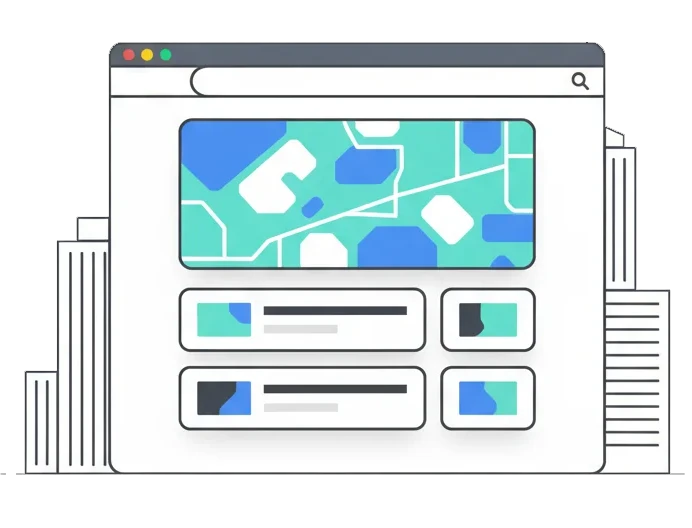
The local pack as it appears today. The slots below are earned; the space above them is sold.
What each one actually is
Local SEO makes a business visible to people searching nearby, mainly through a Google Business Profile and placement in the local pack. Google’s documentation names the factors: local results are based mainly on relevance, distance, and popularity.
Distance is the factor that runs this region. Quarc is based in Langley, and the Lower Mainland holds roughly 3.05 million people across Metro Vancouver and the Fraser Valley. A pin in Maple Ridge is not close to Vancouver, and no budget changes that. You can set up to 20 service areas by city or postal code, but listing a city does not make you rank there. Service area tells Google where you work; distance still decides who sees you. Conflating the two is the single most common expensive mistake we untangle for new clients.
Google Ads is an auction. You bid for placement, you pay when someone clicks, and your cost is set by what competitors will pay rather than by a rate card. Turn it on and you can be visible this afternoon. Turn it off and you are gone by dinner. That speed is the strongest argument for paid search, and it is the entire argument. Nothing bought in an auction accrues.
Side by side
| Local SEO | Google Ads | |
|---|---|---|
| Cost model | Labour, billed monthly | Auction, billed per click |
| Time to first lead | Weeks; verification gates it | Same day |
| After you stop paying | Profile & reviews persist | Impressions stop in hours |
| Geographic control | Up to 20 service areas; distance still ranks | Location targeting, set directly |
| Can money buy the position? | No, per Google | Yes, that's the mechanism |
| Competitive ceiling | Three pack slots, now sharing space with ads | Auction depth |
Where each one wins
We sell both, and we will still tell you plainly which one fits your situation.
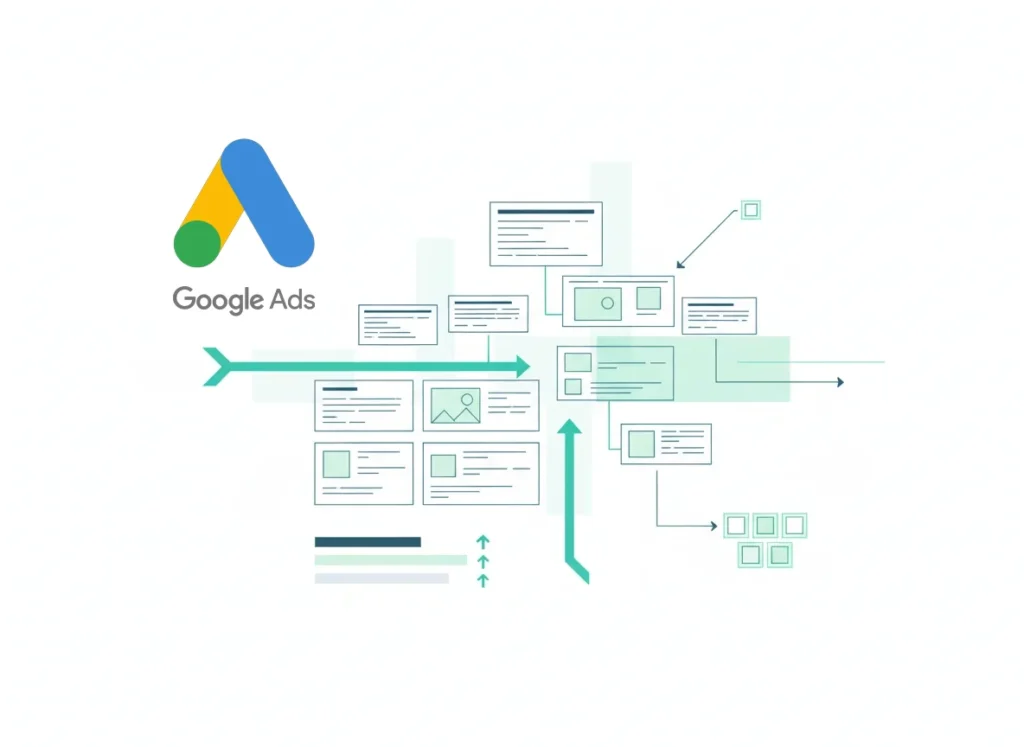
Google Ads wins on…
Speed. Verification takes days to weeks. An auction takes an afternoon. If the phone is quiet in August, SEO is not the answer to August.
Reach past your pin. Distance limits what a Langley profile ranks for in Vancouver. Location targeting does not. You can bid on Vancouver from Langley and appear.
Measurement. Paid search tells you which services convert, and what they cost, in weeks rather than quarters. See how we run Google Advertising →
Local SEO wins on…
Persistence. A verified profile keeps its reviews and category work after an engagement ends. A paused campaign stops the same day.
A position money can’t buy. A bigger budget can outbid you in the auction tomorrow. Nobody can outbid you in the pack, and that is worth more, not less, as the paid space above it grows.
Cost structure. No per-click charge. Volume that grows doesn’t raise the bill. See how we run Local SEO →
The option that breaks the comparison
Local Services Ads sit above both. They charge per lead rather than per click, and they appear above the local pack. Any comparison treating this as a two-way choice is describing a results page from several years ago, which is one more reason to be wary of articles built on a 2018 statistic.
One change matters if you were sold on this before. Google retired the Google Guaranteed, Google Screened, and License Verified badges on 20 October 2025 and replaced them with a single Google Verified badge. The money-back guarantee went with it. If someone is still selling you that guarantee, they are selling something Google stopped offering; worth asking what else on their pitch is out of date.
Not sure which number your business should start from?
We'll run the cost-per-paying-customer math against your own data, not a US benchmark.
What each costs, and why we won't give you one number
Every published benchmark for both channels is US data, in US dollars, from US markets. We won't convert it and call it your cost. Treat these as directional.
Google Ads: cost per click
Home services, low end — US$3.50
Home services, common — US$5–6.55
Home improvement (WordStream) — US$7.85
Kitchen & bath remodel terms — US$8–18
Local SEO: monthly retainer
SE Ranking: 64% of agencies — < US$1,000
GoodFirms: 43.3% — < US$1,500
Ahrefs average — US$3,209
GoodFirms: only 5.5% — > US$5,000
The number that actually decides it. SearchLight Digital tracked US$6.72M in Local Services Ads spend across 888 contractors in Feb 2026. Cost per lead: US$53. Cost per paying customer: US$233, at a 43.9% book rate. Cost per lead is what vendors quote. Cost per paying customer is what determines profit, and the gap is more than four to one. (We checked the arithmetic: $53 ÷ 43.9% is $120.73, not $233, so the published figure accounts for something the division doesn’t. We flag that the way we would in a client report.) Ask any provider, us included, for cost per paying customer against your own data. If they can’t produce it, they aren’t measuring the thing you’re buying.
How to choose
The question is not which channel is better. Ads buy attention; the profile buys an asset. The only variable that decides the order is how long you can wait.
Fund paid search first
When your payback window is short. If next month's acquisition depends on this month's cash, weeks of verification is not a plan you can survive. Ads buy the time.
Fund the profile first
When your payback window runs past a quarter. It compounds, survives the end of an engagement, and holds a position a better-funded competitor can't take by spending more.
Run both
When the ads have a job beyond volume: paying for themselves while telling you which services convert, so you learn what to build the profile around.
Add Local Services Ads
If you're in a qualifying trade. It sits above both, and the choice was never really binary.
Frequently asked questions
No. Google states directly that local ranking cannot be requested or purchased. You can buy ad slots inside and above the pack, which is a different position on the same page. Google is selling far more of them than it was a year ago.
No. Service area tells Google where you work; distance from the searcher is a separate ranking factor. You can list up to 20 service areas within about two hours’ driving time, and listing one does not place you in its pack. Setting these correctly is part of what we do in the first month of a Local SEO engagement.
Your profile keeps what it earned. Reviews do not expire when an invoice does. Organic position does not switch off the way a paused campaign does; it holds and then slips only as competitors keep working. Paid campaigns stop the day the budget does.
No. Service-area businesses verify without displaying an address. Setting the service area correctly matters more than having one, because you cannot use a radius and you cannot list a province.
No. Google replaced it with the Google Verified badge on 20 October 2025 and retired the money-back guarantee that came with it.
Often yes, as long as the ads have a job beyond raw volume. We commonly run paid search to learn which services convert, then build the organic profile around that data and wind the ads down as the profile takes over. A free audit will tell you whether that sequence fits your numbers.
We'll tell you which one to fund first.
Book a free audit and we'll run the cost-per-paying-customer math against your own numbers, map your service areas correctly, and recommend the channel that fits your payback window. No borrowed averages. No 2018 statistics. If Local SEO isn't your right first move, or your current provider is already doing good work, we'll tell you that too.
Book a free auditQuarc Digital: Local SEO & Digital Marketing Scientists · Langley, serving Metro Vancouver & the Fraser Valley · (778) 726-1420